Carrying a Long Lens Across Hill Ground

A tooled leather carrying strap resting on a mossy dry stone wall in the Highlands

Highland photography is mostly walking. The shot at the end of it might take ninety seconds, but getting there is eight miles of peat hag, tussock and bog, usually in the dark at one end of the day. And if you shoot wildlife rather than landscape, you are doing that walk with a long lens and a body on your shoulder, which together can run to four kilos before you add a tripod.

What the Stalkers Worked Out First

There is nothing new about carrying awkward weight across this ground. Deer stalkers have been doing it on the same hills for two centuries, with a rifle of roughly the same mass and length as a 500mm lens, and they settled on their answer a long time ago: a wide leather sling, carried muzzle down, with the load sitting on the meat of the shoulder rather than hanging off the neck. Watch a stalker cover ground and you will notice the rifle barely moves.

Mist rising off a Highland loch at dawn with heather in the foreground

Why the Strap in the Box Fails

The strap that ships with a camera is designed to be cheap and to fold flat in a box. It is narrow, it is thin nylon, and under real weight it turns into a cutting edge across the trapezius. Worse, it lets the lens swing. Every step transfers into a pendulum, which is exhausting over distance and genuinely dangerous when you are picking a line down a wet slope and something heavy is trying to steer you.

Width is what fixes this. A sling two inches across spreads the same load over enough surface that it stops digging in, and good leather conforms to the shoulder rather than sliding off waxed cotton. This is why a fair number of hill photographers quietly end up ordering a personalized rifle sling cut to their own drop length and fitting quick-detach swivels to the lens collar instead of the camera body. Mounting at the collar matters as much as the strap itself; hanging a heavy lens off the camera’s lugs puts all that leverage through the lens mount.

Watch: Wildlife Gear - Carrying with Slings, Straps and the QD System
Watch: Wildlife Gear – Carrying with Slings, Straps and the QD System (YouTube)

Fit Before Finish

Hand saddle-stitching along the edge of a thick leather strap

Measure your drop length wearing the jacket you actually shoot in, not a shirt. Two inches of difference is the gap between a lens that sits neatly at the hip and one that clatters against your thigh all morning. Saddle stitching is worth paying for, because a machine lockstitch unravels along its whole length once a single thread goes, and hardware should be brass or stainless if it is going to live in Scottish weather.

One Less Thing to Think About

None of this improves a photograph directly. What it does is get you to the ridge with a shoulder that still works and attention left over for the light. On a hill day, that is the whole game.
Small Gear, Big Difference: Staying Organised in the Highlands

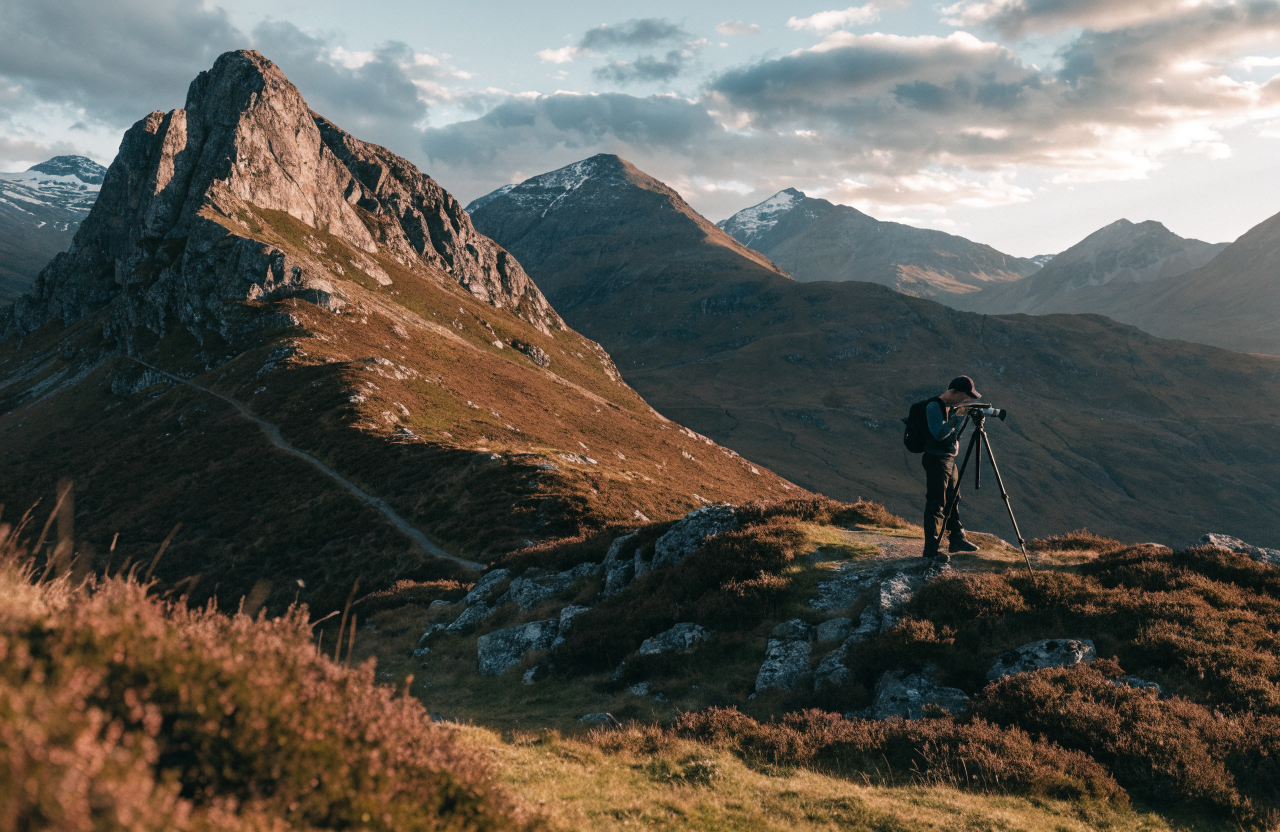
A landscape photographer on a Scottish Highland hillside at golden hour

Landscape photography in Scotland is a test of preparation as much as vision. The Highlands reward the photographer who is out before dawn and still shooting after the light has gone, often in wind, rain, and terrain that does not forgive a careless step. In those conditions the difference between a productive morning and a miserable one usually comes down to the least glamorous part of the kit: how well your small gear is organised.

Organized Gear in Unforgiving Country

Anyone who has fumbled for a lens cap in failing light, or watched a memory card disappear into wet heather, knows the frustration. Out on an exposed ridge there is no bench to lay things out on and no second chance if something slips from cold fingers. The photographers who work efficiently in the field are the ones who have tethered, clipped, and secured the little things so they cannot wander off.

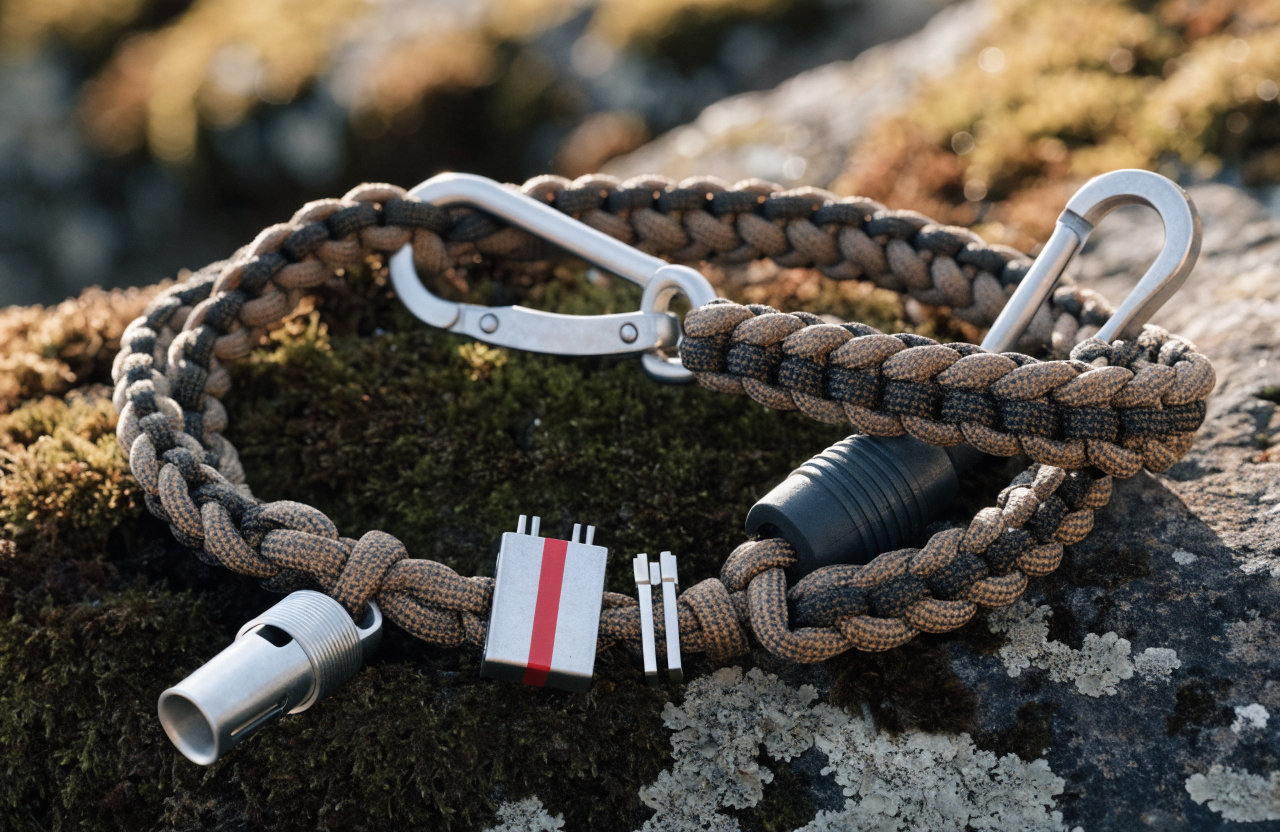
A simple, rugged tether solves more problems than it should. A banded lanyard keeps a whistle, a set of keys, a lens brush, or a remote release within instant reach and off the ground. Made from tough paracord, it stands up to weather and abrasion, and it turns a handful of easily-lost essentials into one reliable, wearable system you can grab without looking.

The same field-organisation habits apply well beyond photography, as this look at practical cordage gear shows:

Safety When the Weather Turns

A rugged paracord field lanyard with camera gear on a rock

There is a safety dimension worth taking seriously in Scotland’s backcountry. The weather can turn in minutes, and a photographer absorbed in a composition can lose track of both time and conditions. Keeping a whistle on a lanyard around your neck, rather than buried in a pack, is the kind of small preparedness measure that costs nothing and matters enormously if a walk out turns into an emergency.

Efficiency in the field also protects the shot itself. The best light in the Highlands is fleeting, sometimes lasting only a minute as the sun breaks under a bank of cloud. Every second spent digging through pockets is a second the mountain is not being photographed. Gear that is instantly to hand lets you stay on the viewfinder during the exact window that separates a good frame from a great one.

Chasing the Light Without the Fumble

Weight and simplicity favour the minimalist too. Highland photography often means long walks in, and every gram counts. A lightweight lanyard adds almost nothing to your load while replacing the mental overhead of tracking small items across a long, cold shoot. It is the sort of unobtrusive tool you forget you are wearing until the moment it saves you a scramble through the grass.

Great images from Scotland’s wild places will always start with an eye for light and land. But the photographers who consistently come home with them are usually the ones who have their systems sorted, right down to how they carry a lens brush. Sort out the small stuff, keep your essentials tethered and ready, and you free yourself to do the thing you actually came for: watch the light and press the shutter at exactly the right moment.